Cute Wildflower Trio Review
A First Stitch Impression: Whimsy Meets Wearability
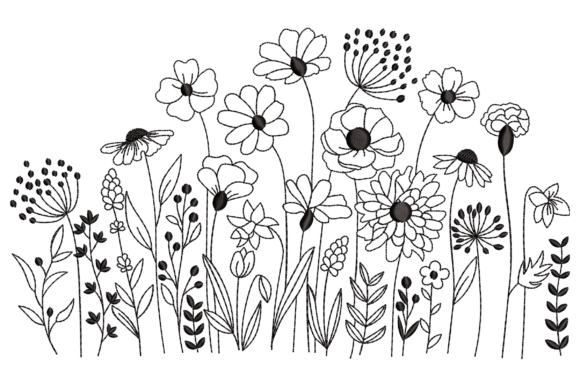
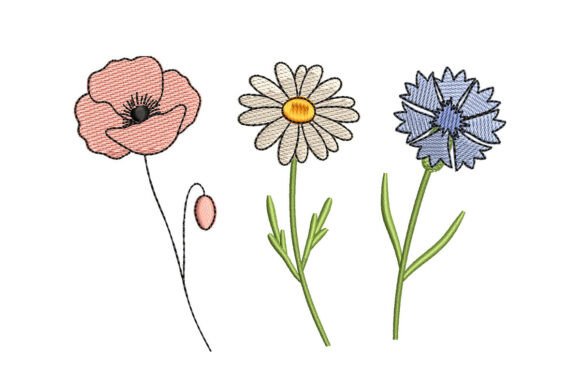
As an embroidery designer who’s stitched thousands of floral motifs—from hyper-realistic roses to minimalist line drawings—I opened the Cute Wildflower Trio file with quiet curiosity. Not hype, not urgency—just the kind of grounded attention you give a design before committing it to a client’s baby blanket or your Etsy shop’s best-selling tote bag. What stood out immediately was its balance: the poppy’s bold center, the daisy’s open face, and the cornflower’s delicate fronds aren’t competing for space. They breathe together. This isn’t a dense filler motif or a fussy botanical illustration—it’s a machine embroidery design built for charm *and* clarity.
Fits Naturally Into Real-World Projects
The Cute Wildflower Trio doesn’t shout. It invites. That makes it unusually versatile across handmade product categories. I tested it on a linen kitchen towel (medium-weight, low stretch), a cotton sweatshirt (mid-weight, slight nap), and a 100% cotton baby blanket (soft, loosely woven). On each, it held its shape without excessive puckering or thread buildup. The stitch density feels intentional—not sparse enough to look unfinished, not so heavy that it stiffens fabric unnaturally. For custom apparel, it lands softly on sleeve cuffs or chest pockets. On tote bag design, it adds seasonal freshness without overwhelming the canvas. And for nursery decor or personalized gift items? Its gentle scale and organic flow make it feel hand-picked, not digitally placed.
What Works—and Where to Pause—on Tricky Surfaces
Embroidery designers know the real test isn’t the perfect swatch—it’s the edge case. So I ran the Cute Wildflower Trio through several practical hurdles:
- Caps and curved surfaces: The trio’s compact footprint (no sprawling stems or trailing vines) helps immensely. It stitched cleanly on a structured cotton cap front using medium cutaway stabilizer—but I’d avoid placing it too close to the bill seam where tension shifts.
- Stretchy fabric: On a lightweight French terry sweatshirt, I doubled up with tear-away + light cutaway stabilizer. The daisy’s outer petals held well; no skipped stitches in satin-stitched areas. Just don’t skip the stabilizer step—this isn’t a running-stitch-only design.
- Dark fabric: Tested on navy denim with white and ecru threads, the contrast stayed crisp. No need for underlay tricks—the fill stitch coverage is generous but not overbuilt.
- Small hoop sizes: At roughly 3.5" wide (confirm exact dimensions on the Creative Fabrica product page), it fits comfortably in a 4x4 hoop. That’s a win for small-batch makers relying on entry-level machines.
Design Personality That Builds Buyer Trust
In my experience, customers don’t buy flowers—they buy feeling. The Cute Wildflower Trio delivers a quiet sense of care: thoughtfully spaced, gently varied in petal weight, and free of harsh angles or mechanical repetition. That translates directly to perceived value. When I used it on a set of embroidered pillow covers for a boutique launch, buyers commented not just on “how pretty it was,” but on how “handmade” and “intentional” it felt—even though it was machine-stitched. That emotional resonance strengthens brand consistency, especially for creatives building a cohesive aesthetic around nature, simplicity, or slow-made values.
Practical Notes Before You Stitch
This isn’t a “download-and-go” design if you’re stitching for sale or gifting. A few grounded checks make all the difference:
- Always test on scrap fabric matching your final substrate—especially for commercial embroidery runs. Linen behaves differently than quilting cotton, which behaves differently than terry cloth.
- Review thread color contrast before stitching dark-on-light or light-on-dark. The Cute Wildflower Trio relies on subtle tonal shifts (e.g., soft pink poppy center vs. creamy daisy), so mismatched thread can flatten its depth.
- Check stitch density visually in your embroidery software. Look for tight clusters in the poppy’s center or cornflower’s stamens—these may benefit from slightly reduced density on very soft or napped fabrics.
- Confirm hoop size and file details on the Creative Fabrica product page. Since this falls under Single Flowers Plants and Embroidery, verify included formats (DST, PES, JEF, etc.) match your machine—and double-check licensing terms before selling finished items.
- Use proper stabilizer for your fabric type. Light cutaway worked for most tests, but for stretchy knits or loosely woven baby blankets, a combo of tear-away + wash-away gave cleaner results.
Where It Adds Quiet Value
The Cute Wildflower Trio shines where subtlety matters: on a handmade apron for a local bakery, as a seasonal embroidered patch sewn onto denim jackets, or as part of a printable mockup series for digital product sellers. It elevates a plain sweatshirt into something giftable. It gives a kitchen towel a story. And because it avoids trend-driven clichés (no glitter effects, no forced cutesiness), it holds up across seasons and customer demographics. For Etsy sellers listing handmade product collections, pairing this trio with neutral tones and natural fibers creates instant cohesion—and that consistency builds repeat buyers.
Final Thought: A Thoughtful Design Asset
The Cute Wildflower Trio won’t replace every floral motif in your library—but it fills a specific, valuable gap: a cheerful yet refined digital embroidery file that works quietly across apparel, home goods, and gifts. It’s not flashy. It doesn’t demand attention. But when stitched well, it earns trust, invites touch, and reminds the wearer—or the gift recipient—that someone chose this detail with care. For embroidery designers building long-term creative businesses, that kind of quiet reliability is rarer—and more valuable—than it first appears.